
World War II brought with it the downsizing of the sheep industry in Wyoming due to a decrease in man-power. Then, just a few years later, in 1952, Hartt died at Baggs Wyoming enroot (via ambulance) from his summer headquarters in Hahn’s Peak to his home in Rawlins (55). He was 81 years old at the time of his death from a heart attack and was an insulin dependent diabetic.
Hartt’s pallbearers were chosen because they were some of his closest business associates. They included Cow Creek and Pioneer banking partner, Robert Bible. Also listed are Bud Brimmer and his father, C.A . Brimmer, Sr. (honorary pall bearer) (56). Both the Brimmers were lawyers in the area and the elder Brimmer had been active in sheep-related range legislation during the early part of the century (57). Bible was a financial advisor to Hartt and C. A. Brimmer was his attorney. Being long time business associates, Bible and C.A. Brimmer were also named as the executors of Hartt’s estate in his will (58).

Hartt’s estate remained very large, despite the changes in company management and the sheep industry. By the time of his death, Yellowstone owned 17,000 acres of land in Freemont County and had 3.5 townships of allotment. It ran 1,800 head of cattle and 7-8,000 sheep. Cow Creek & Pioneer had about 50,000 acres and 44,000 acres of leased land, primarily in Carbon County. It ran 21,000 to 22,000 head of sheep (59). The portion of the estate to be distributed was worth approximately 1 million dollars (60).
Hartt’s death brought bitter disputes to those left behind due to the size of the estate and conflict over the will. Pearl, joined by five of her six daughters, filed four lawsuits against executors Bible and Brimmer. Pearl is said to have filed the lawsuits to contest the “will” after her brother, Spragg, got discouraged by it and sold to executors Bible and Brimmer at a low price (61). Her daughter Marjory was Cow Creek foreman Higley’s wife, and therefore, she did not join her mother and sisters in the emotionally charged suit. This vicious dispute split the family for many years.

The Wyoming Supreme Court called the Hartt lawsuits: “A barrage of lawsuits in connection with the estate as finds few parallels in the law books” (62). Of the four lawsuits, three were eventually appealed to the Wyoming Supreme Court. Those appealed to the higher court included a contest of probate of the will, an action related to the contents of a safe deposit box, and an action for removal of the executors and trustees.
The second lawsuit was a dispute over stock certificates worth 1,000,000 (63) (solely in J. K. Hartt’s name) held in a safe deposit box that was in both J. K. & M. Pearl Hartt’s name. That is, should the stock be considered jointly owned?
The third lawsuit was, perhaps, the most complicated because it involved possible desolation of the sheep companies, the salaries of the officers of the sheep companies, the sale of stock by one shareholder and its resale to foreman Higley and allegations of nepotism by the younger Mr. Brimmer. This lawsuit also questioned Pearl Hartt’s right to be permitted to elect against the will after the time had run when she had not been advised of her rights to do so. It also involved some issues about how to handle moneys earmarked to pay the federal inheritance tax (64).

During the two-year-long appeal to the Wyoming Supreme Court, Pearl attempted to rehire her brother, Spragg, as foreman in an attempt to pull the sheep operations out of debt. The Supreme Court, however, gave the management back to her son-in-law, Higley. Higley, therefore, ran the operation until sold. Bible and Brimmer did liquidate the companies shortly after Pearl’s appeals were overturned, even though they had the right to retain the companies for eight additional years (65).
In 1955, the State Supreme Court upheld the decision of the lower court not to give Pearl ownership of the stock certificates and, also, ruled that Bible and Brimmer could not be removed as executors. A year later, the Court overruled the lower court decision that allowed Pearl to dissent provisions of her husband’s will and gave the executors control of Cow Creek, Pioneer, and Yellowstone Sheep Companies (66). Bible and Brimmer dissolved Pioneer Sheep Company and Cow Creek Sheep Company in 1958 (67) and Yellowstone in 1959 (68).
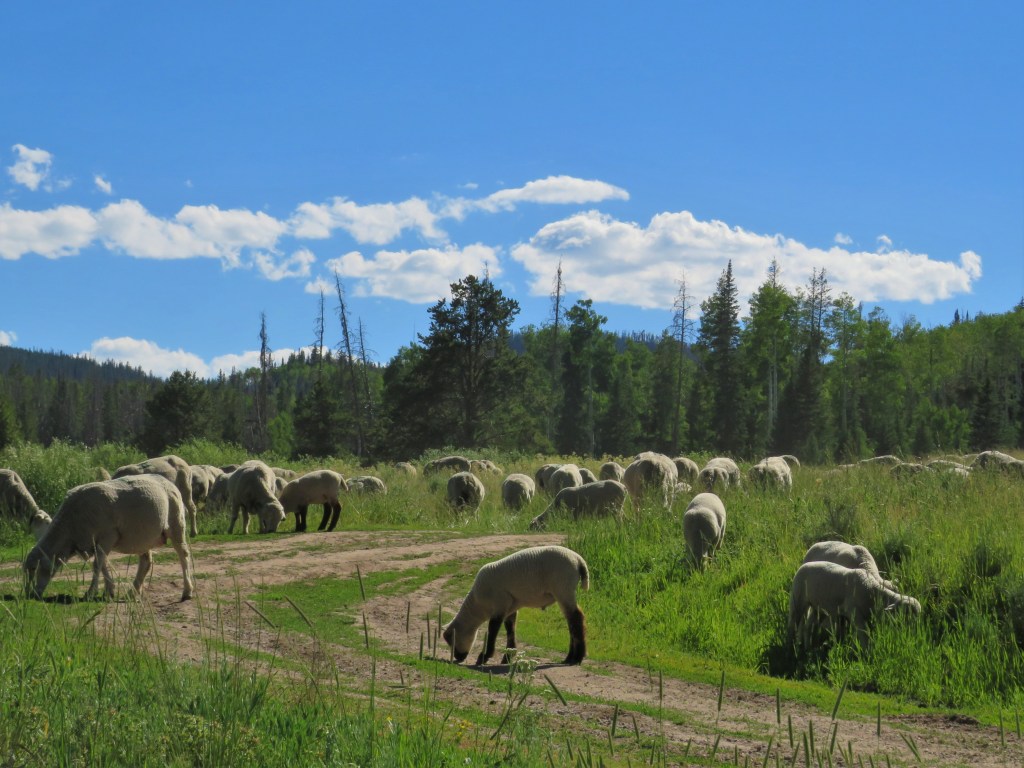
The lawsuits took their toll on family relationships, especially with Marge and Chuck Higley. However, in time the family was able to mend broken relationships and Pearl, her daughters, and their families continued to summer at the Hahn’s Peak “headquarters” even though the sheep were no longer part of the landscape.
Hartt’s Business Ventures Expansion in Rawlins | Sheep Business Development
Pearl Hartt: An Ending Tribute to the Legacy of Pearl Lake’s Namesake
Exploring the History of Pearl Lake State Park: A Journey Back in Time: Chapter Index
- 1. Introduction: the History of Pearl Lake State Park in Routt County
- 2. The Beginning of the Legacy: Go West, John Kelly Hartt
- 3. The Beginning History of Cow Creek and Pioneer Sheep Companies in Wyoming
- 4. Colorado Cattlemen vs. Cow Creek Sheep: The 1903 Stampede
- 5. A Bride From New Brunswick: John Kelly Hartt Marries M. Pearl Hartt
- 6. Sir, They Shot Wilkes Last Night: Life in the Wild West
- 7. Taking the Rap: The Minister’s Son Escapes to Mexico
- 8. The 1910s Tax Dispute: Wyoming Sheep vs. Colorado Cattlemen
- 9. Hartt Family and Sheep Companies at Hahn’s Peak: A Historic Legacy
- 10. Sheep On God’s Mountain: Grassroots Issues
- 11. Hartt’s Business Ventures Expansion in Rawlins | Sheep Business Development
- 12. Family Feuds and Financial Controversies: The Legacy of J.K. Hartt’s Estate in Wyoming
- 13. Pearl Hartt: An Ending Tribute to the Legacy of Pearl Lake’s Namesake
All content in the Exploring the History of Pearl Lake State Park: A Journey Back in Time, including all subsections, are written by Cathy Hartt, granddaughter of Pearl and John Kelly Hartt. Original article written in 2001 with revisions through 2024. Please request written permission for reprints by emailing the author.

 Pearl Lake State Park History